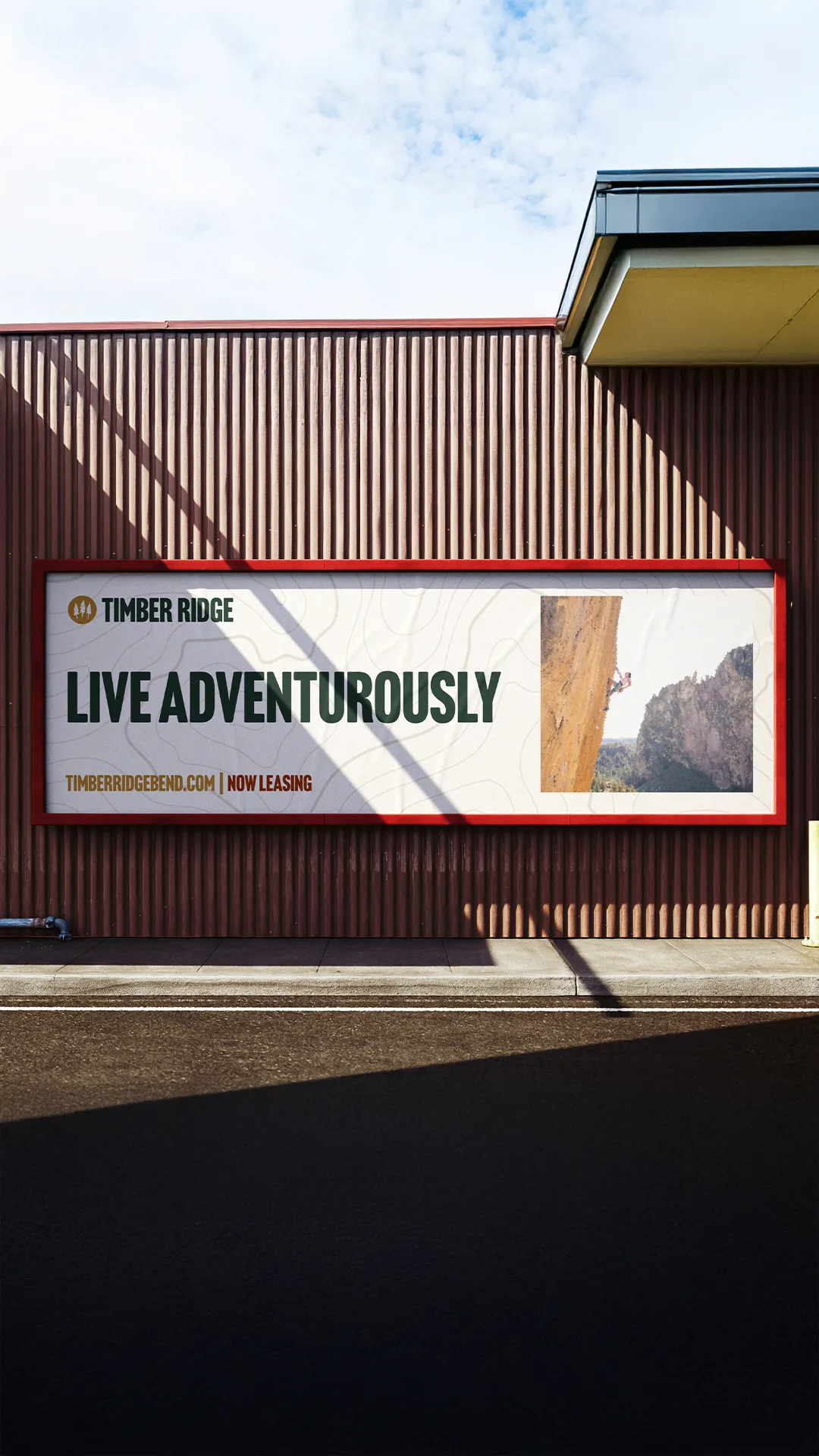
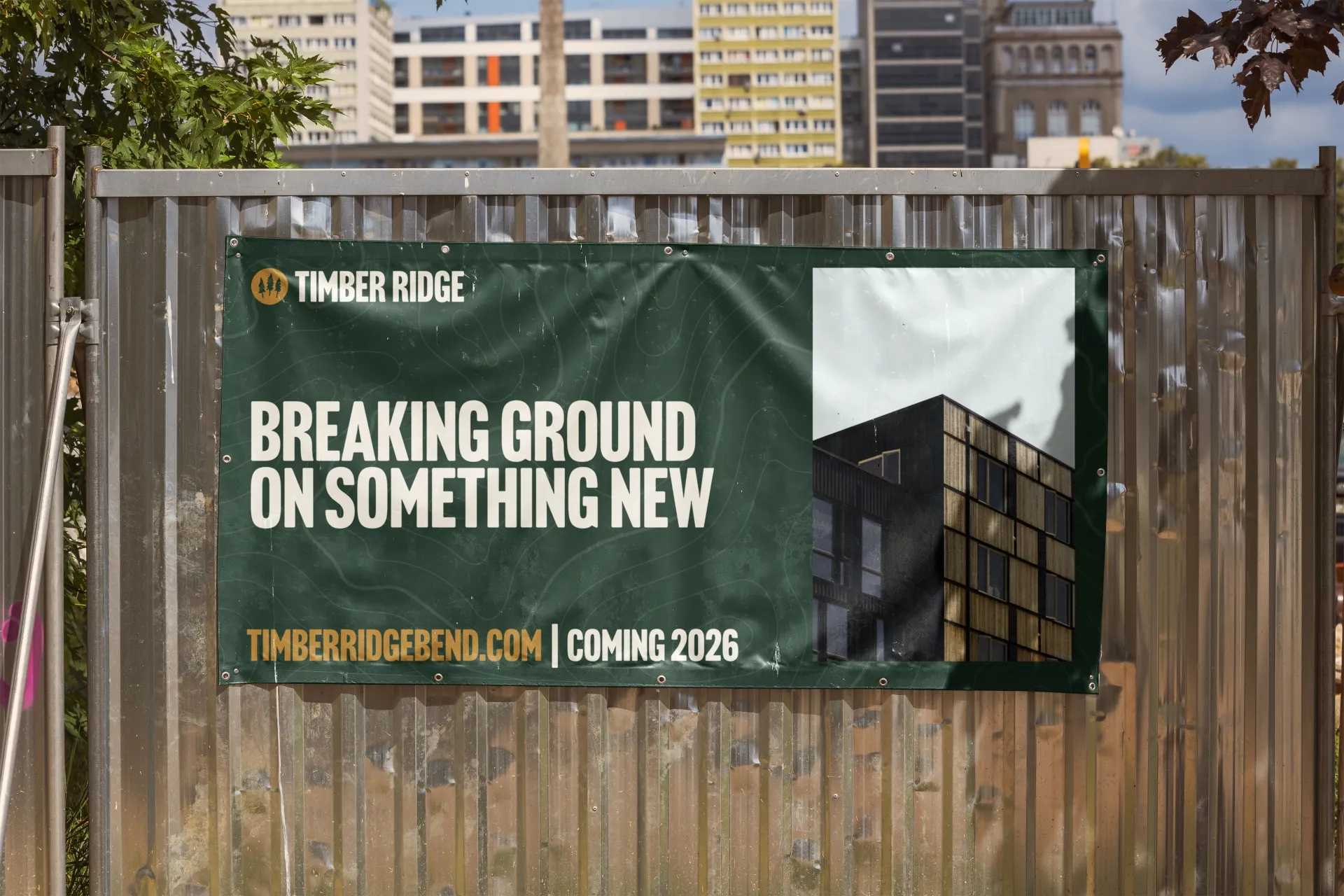
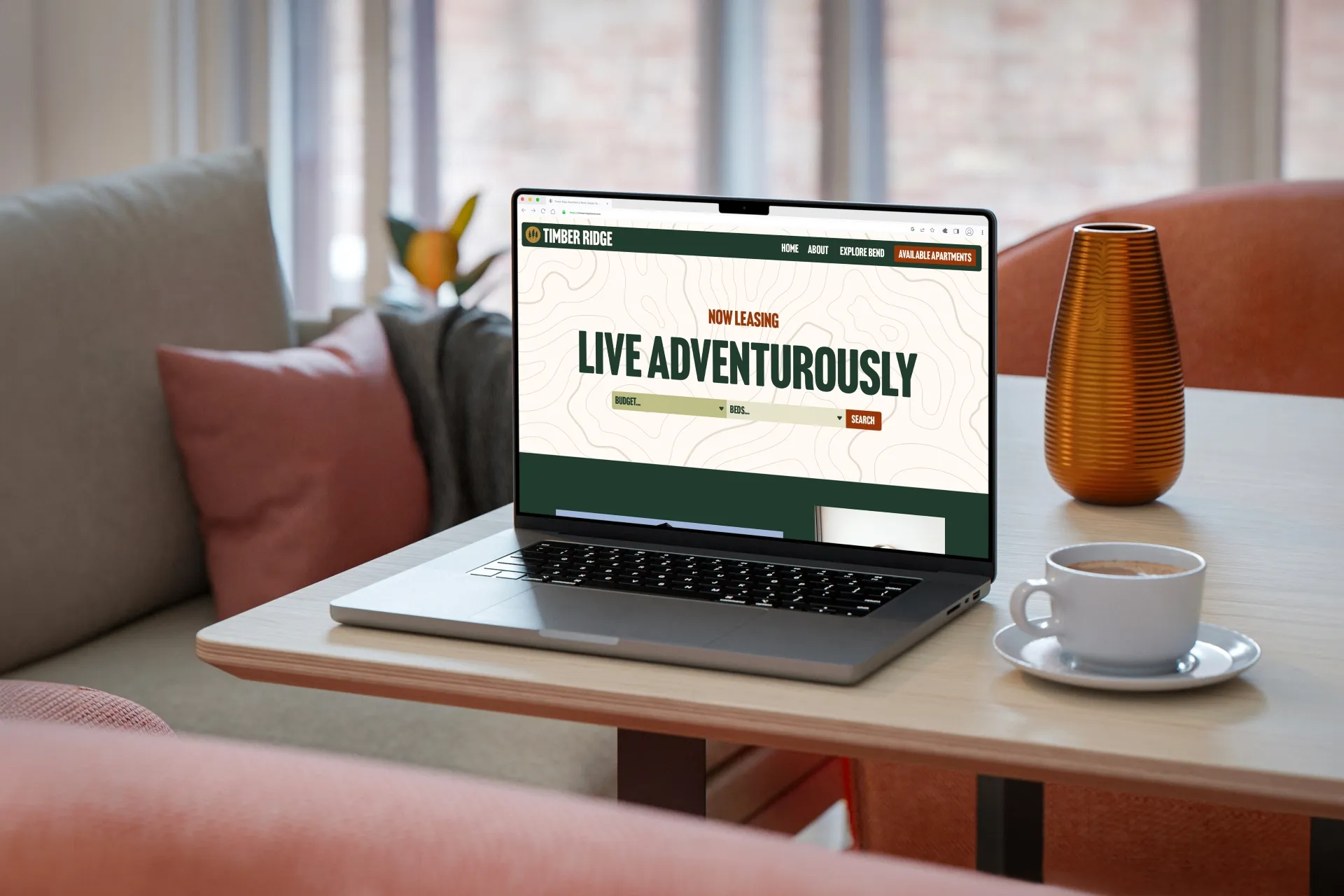
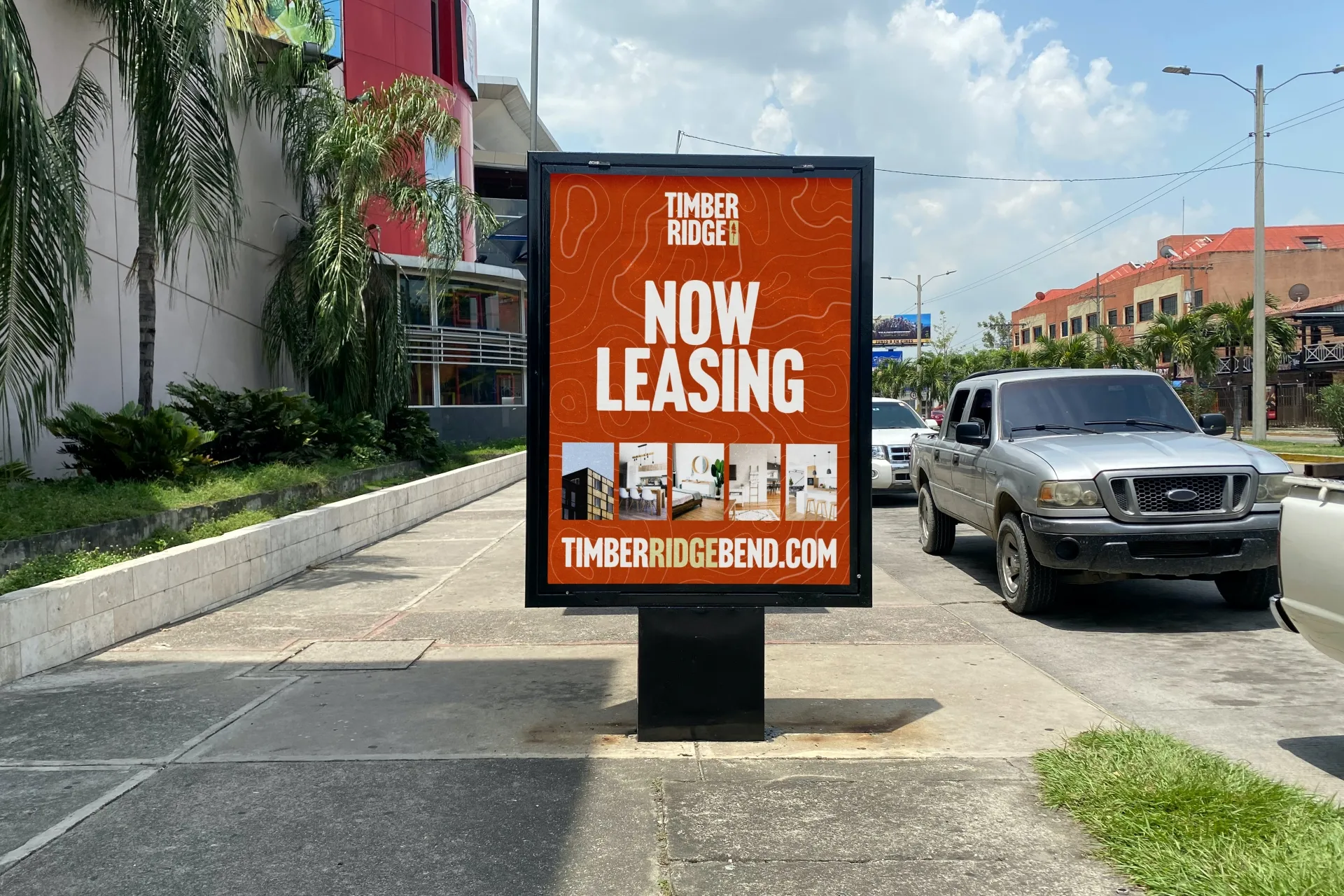
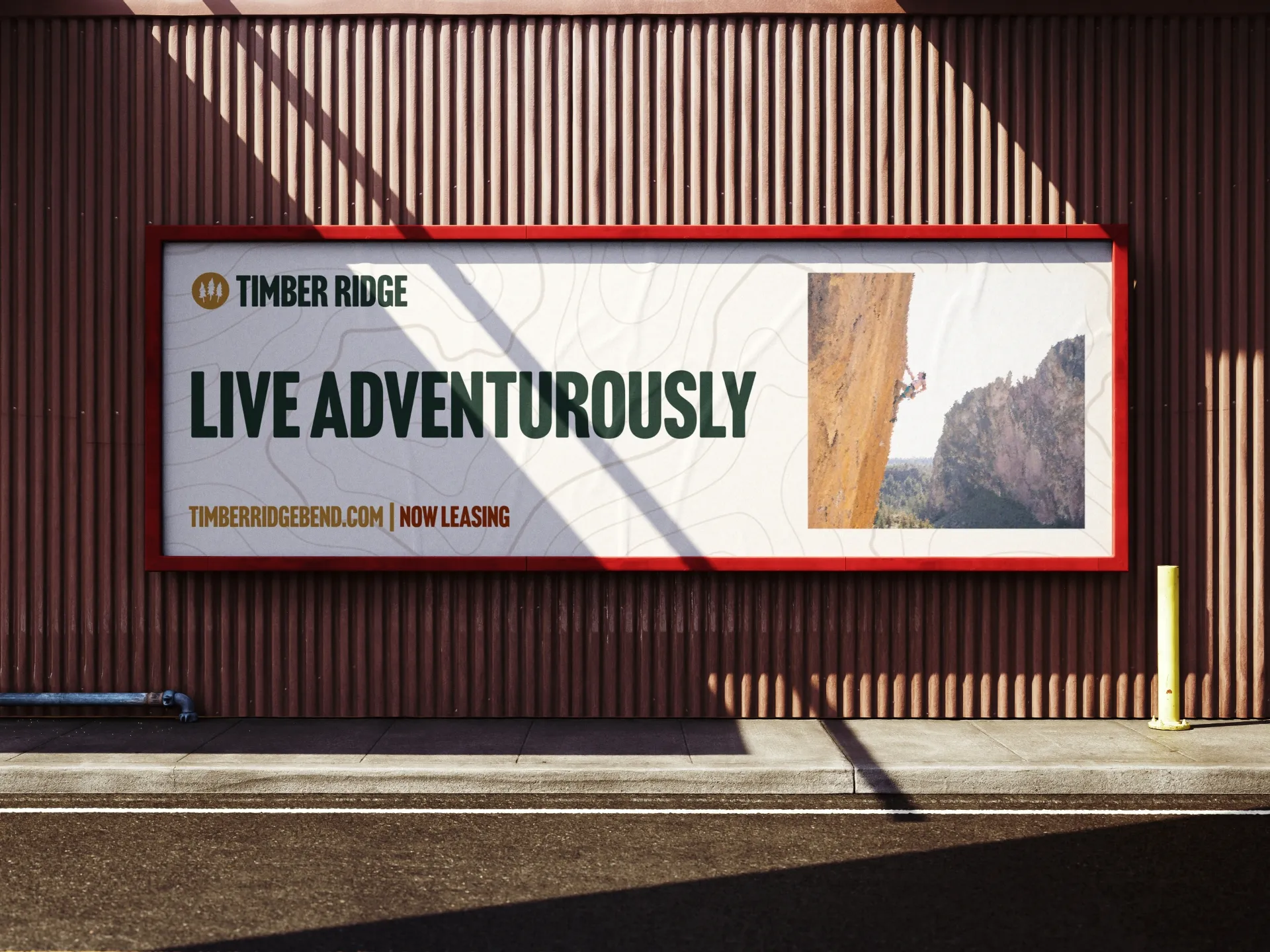
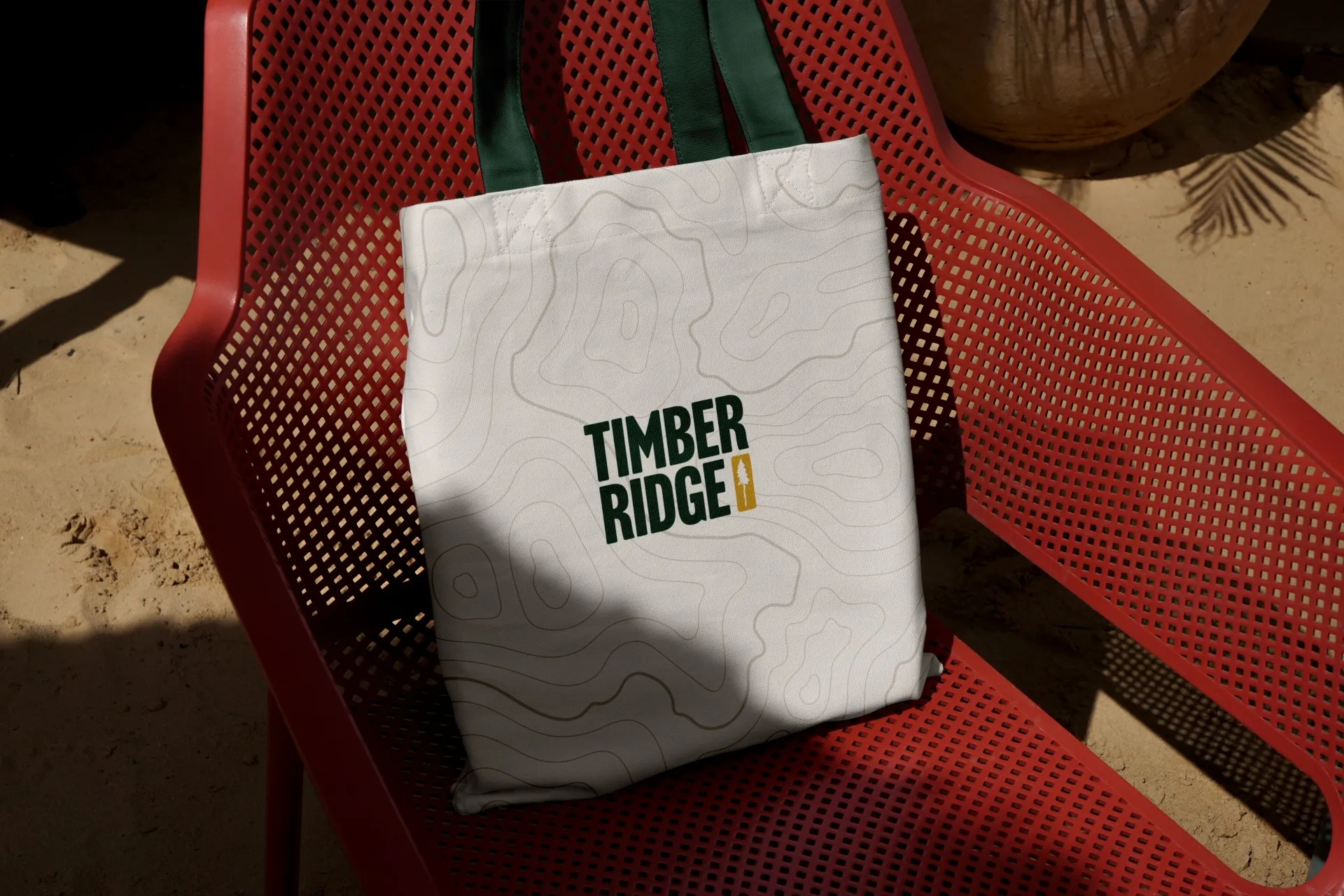
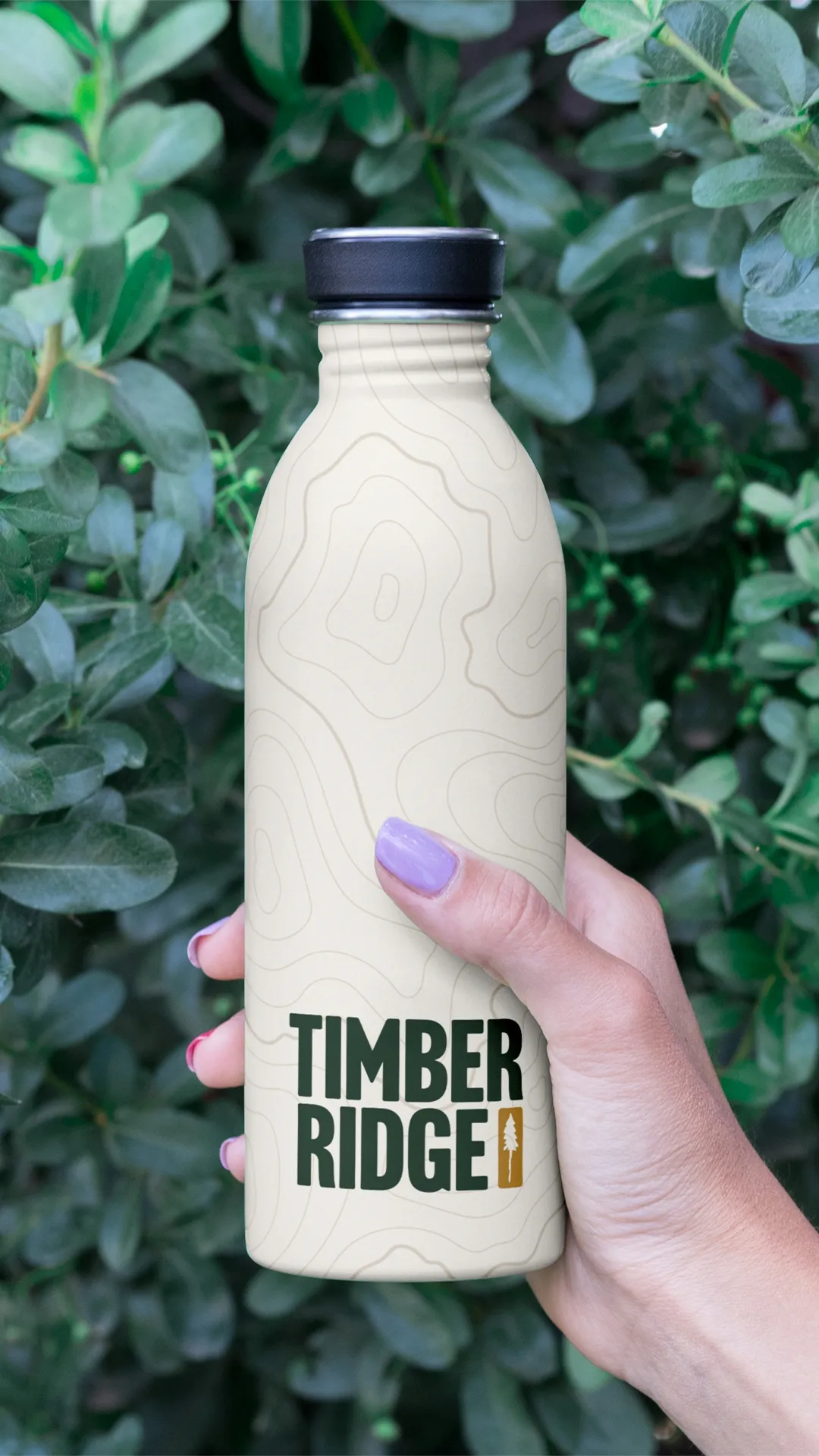
The Timber Ridge concept provided a strategic framework for how the development could be positioned, marketed, and experienced.
Rather than treating branding as a separate marketing exercise, the work demonstrated how identity, environmental graphics, and resident experience could support a unified vision for the community. The result was a system capable of informing decisions across marketing, leasing, signage, and future development efforts.
What Changed
- The development entered the Bend market with a distinct identity rather than the generic apartment brand that most new multifamily projects launch with
- The brand positioned Timber Ridge as a premium but grounded residential experience — modern living connected to the natural landscape — a meaningful differentiator in a competitive Bend rental market
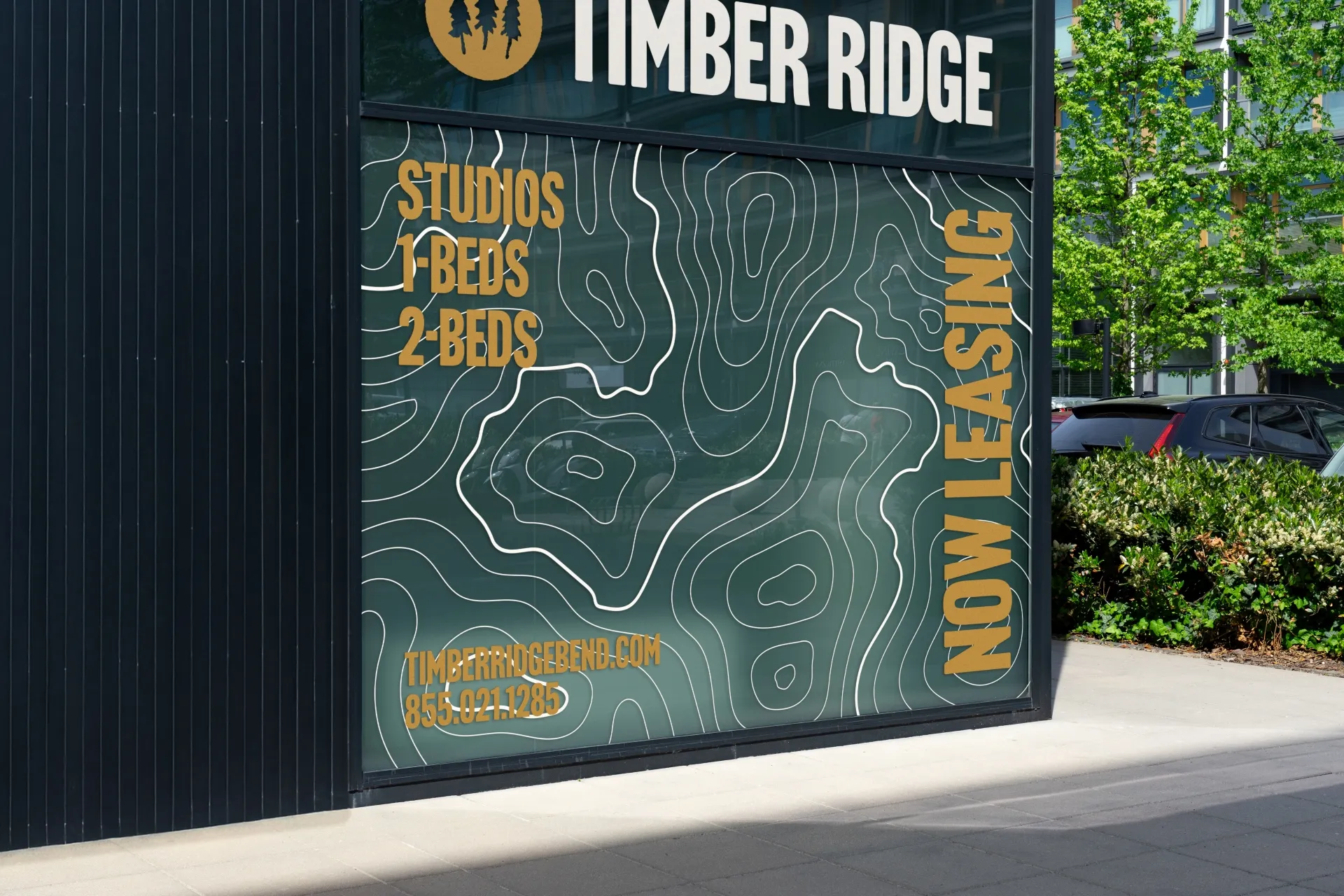
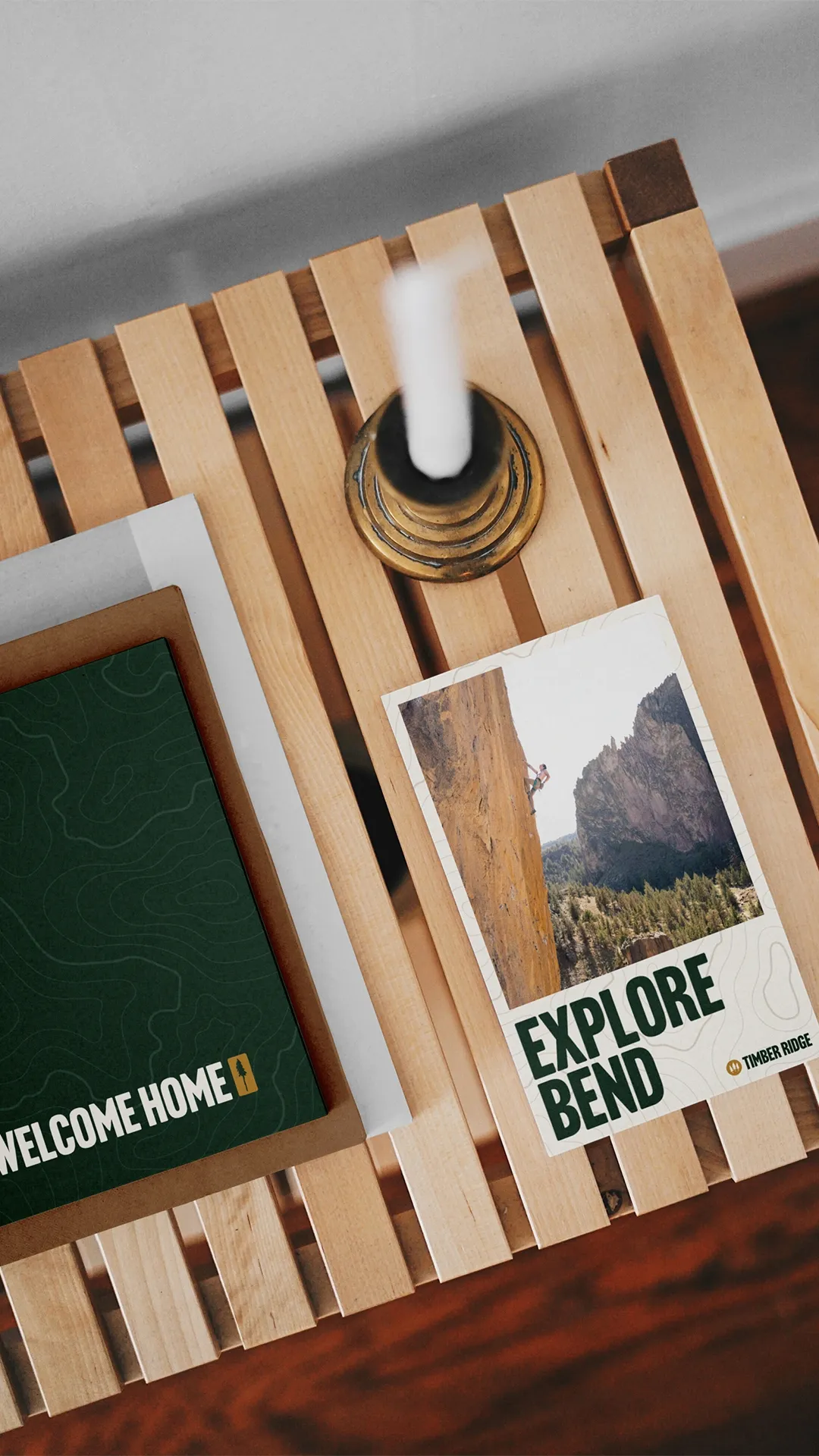
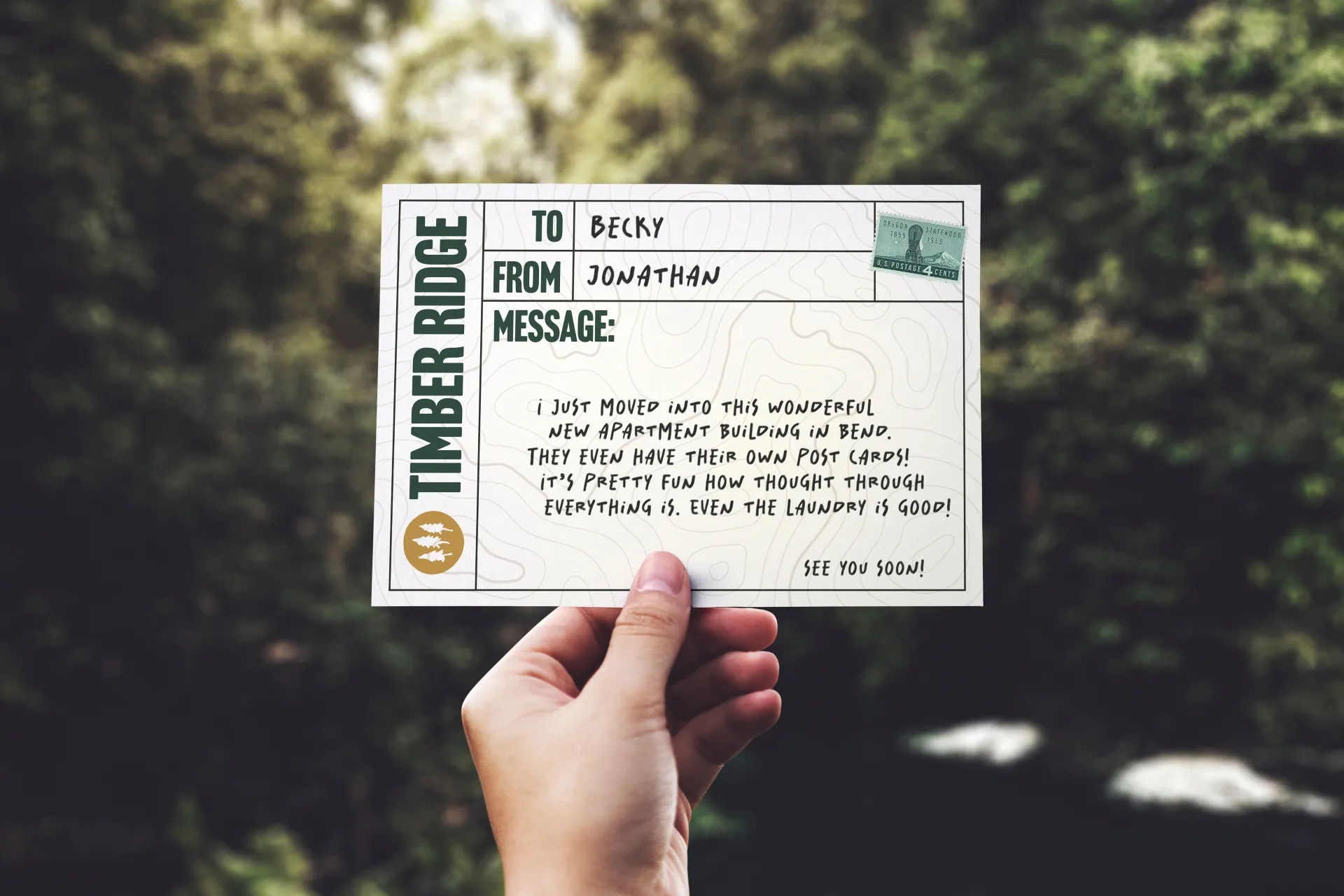
- The visual identity held up across every application: site signage, leasing materials, and digital presence all told a consistent story from day one
- Prospective tenants encountered a brand that communicated quality and character before they ever toured a unit, giving the leasing team a stronger starting point for every conversation
- The conceptual environmental branding established a design direction for physical signage and wayfinding that the development team could build from as the project moved toward completion
Perhaps most importantly, the project illustrates how branding can become a valuable tool during the planning stages of real estate development. A clear positioning strategy helps stakeholders evaluate market fit, communicate value, and create a more cohesive experience long before construction begins.
This project demonstrates how Brand Strategy for multifamily developments extends beyond logos and marketing materials. When approached holistically, branding can help shape how a community is perceived, experienced, and ultimately remembered.