MEP Engineering Firm Branding and Website Strategy
Ask someone what an MEP engineering firm does and most people cannot answer, even people who work in the built environment every day. Mechanical, electrical, and plumbing engineering is the discipline that makes buildings actually function. Heating and cooling. Power distribution. Water and waste systems. None of it is visible once construction wraps, and most of it only gets attention when something fails.
That invisibility creates a specific branding problem. Architecture firms get magazine features. Structural engineers at least get some credit when a building survives an earthquake. MEP firms do some of the most technically demanding work on any project and routinely get the least public recognition for it. If your firm's marketing has felt like an uphill fight to explain why anyone should care, this is why.
Here is how to think about branding and website strategy specifically for an MEP firm.
Stop Explaining What MEP Means. Explain What It Solves.
Most MEP firm websites lead with a services list. Mechanical design. Electrical engineering. Plumbing and fire protection. Energy modeling. That is accurate and it means almost nothing to the developer, architect, or owner reading it, because it describes disciplines instead of outcomes.
The MEP firms that stand out lead with the problems they solve, not the systems they design. A data center client does not care that you do mechanical design. They care that you understand cooling loads for high-density compute environments and have done it before at scale. A hospital client does not care about your electrical engineering credentials in the abstract. They care that you understand emergency power requirements for a facility that cannot go dark. Specificity about outcomes does more for an MEP firm's positioning than any list of services ever will.
Coordination Is Your Actual Differentiator. Most Firms Never Say So.
Every MEP firm claims strong coordination with architects and contractors. It is one of the most repeated, least differentiated claims in the industry, right up there with quality and integrity. The reason it gets repeated so often is that it is genuinely one of the biggest sources of client pain. Clash detection failures, late-stage redesigns, and coordination breakdowns between disciplines cost real money and real schedule delays on almost every complex project.
Firms that can describe specifically how they prevent that, what software and process they use, how early they get involved, what a typical clash detection cycle looks like on their projects, are saying something a client can actually evaluate. "We coordinate well" is a claim. "Here is our BIM coordination process and here is a project where it prevented a six-week schedule slip" is proof. Most MEP marketing never gets past the claim.
Sustainability Credentials Need Specificity Too
Every MEP firm now markets some version of energy efficiency and sustainable design, largely because codes require it and clients expect it. That means sustainability language alone no longer differentiates anyone. What differentiates a firm is specificity about what they have actually delivered. Energy modeling results on a specific project type. LEED or WELL certification experience with real project counts. A point of view on electrification and where the industry is actually heading versus where the marketing language says it is heading.
Vague sustainability claims are now typical, the same way licensure and insurance are nesessary. The firms winning work on this front are the ones getting specific about outcomes rather than repeating the same handful of certification acronyms everyone else uses.
The Website Needs to Speak to Owners and Engineers at the Same Time
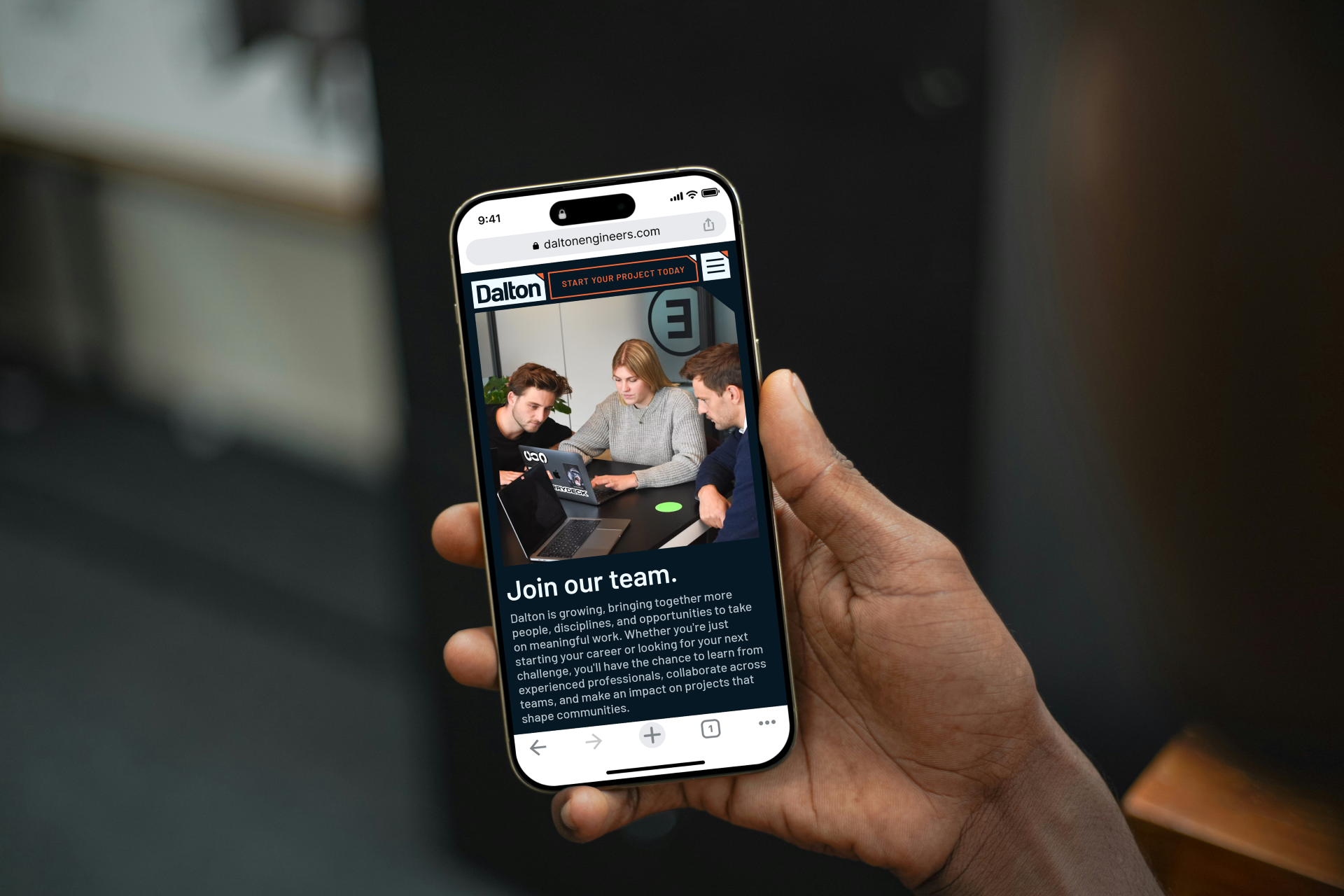
MEP firm websites often get written for other engineers, dense, technical, assuming a level of familiarity most readers do not have. Or they swing the other direction and get so simplified that a technically sophisticated client reads it and immediately doubts the firm's depth.
The right answer sits between those two failure modes. Technical enough that a facilities director or a competing engineer takes the firm seriously. Clear enough that a developer or owner without an engineering background can actually follow what is being said and why it matters to their project. That balance is hard to strike and it is exactly where most MEP websites fail, usually by erring too far toward internal engineering language that was written by engineers, for engineers, and never translated for the actual buyer reading the site.
Project Case Studies Need More Than Square Footage
A lot of MEP project pages list the building type, the square footage, and a system summary. That tells a reader what was built. It does not tell them what was hard about it, or what the firm's approach actually produced. Was there a tight mechanical room constraint that required a nonstandard layout. Was there a phased renovation that had to keep existing systems running. Was there an energy performance target that required a specific design strategy to hit.
The MEP firms whose case studies actually convert readers into inquiries are the ones treating each project as a short story about a specific problem and a specific solution, not just a spec sheet.
Learn about branding for engineering firms
See our approach to engineering firm websites
Suggested Reading:
Structural Engineering Brand Strategy
Civil Engineering Brand Strategy
Geotechnical Engineering Brand Strategy