How to Rebrand Two Merging Architecture Firms Without Losing What Made Either One Worth Merging
Rebranding a single architecture firm is complex. You are working with deeply held opinions about design, identity, and what the practice stands for, often held by principals who have spent decades building the firm's reputation and feel, correctly, that they have a stake in how it is represented.
Rebranding two firms merging into one is something else entirely.
Now you have two sets of deeply held opinions, two sets of client relationships tied to existing brand identities, two histories worth honoring, and the added complexity of a leadership transition that is almost always happening simultaneously — older principals stepping back, newer leadership stepping forward, and everyone trying to navigate what continuity means when the entity itself is changing.
The work Fairbuilt did with OrangeWall+WaterLeaf an Architecture Studio in Portland, Oregonis the clearest example in our portfolio of what this kind of engagement actually requires. Here is what we learned.
Why Architecture Firm Mergers Are a Distinct Brand Challenge
Most rebrand processes start with a reasonably clear client, one firm, one leadership team, one set of goals. The brand strategy work involves surfacing what is true about that firm, defining what it wants to be known for, and building a visual and verbal identity around those realities.
A merger rebrand starts with all of that complexity doubled, plus the added layer of needing to create something that is not just the sum of two existing identities but a genuinely new entity that can carry both legacies forward.
The questions that a single-firm rebrand takes for granted become live debates in a merger context. What do we name this new firm? How do we honor both histories without creating an AEC brand that looks like a compromise? Which elements of each firm's existing identity should carry forward, and which should be left behind? How do we communicate to existing clients that this is a continuation of the trust they have built with their firm, not a disruption of it?
And underneath all of those questions: how do we manage a decision-making process across a group of principals who have spent their careers leading their own firms, each with a legitimate claim to shape the outcome?
The Stakeholder Challenge and How to Handle It
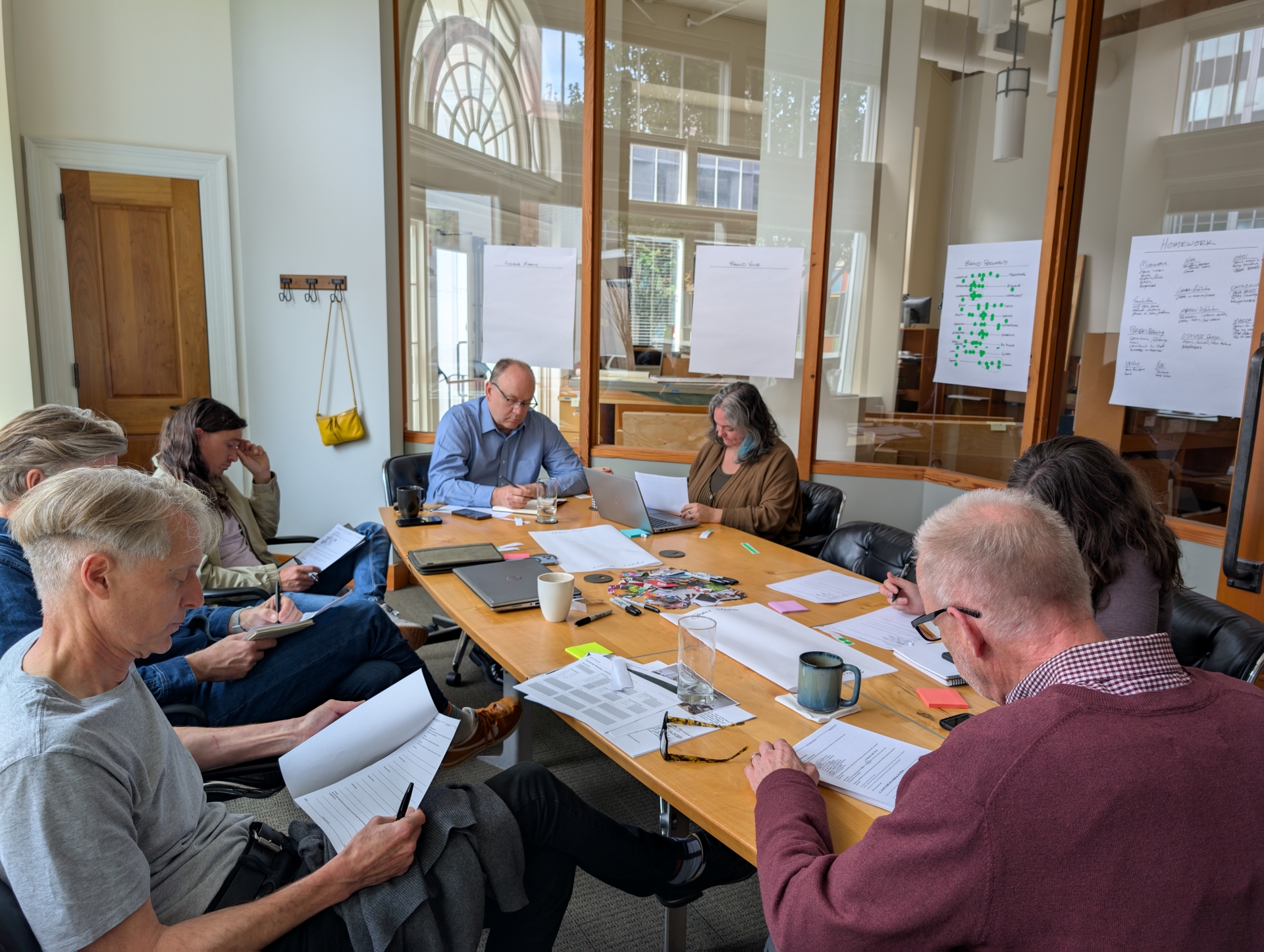
The OrangeWall+WaterLeaf engagement involved eight stakeholders. Principals from both firms at different stages of their careers, with different levels of attachment to the existing identities and different visions for what the merged firm should become.
Eight stakeholders in a brand process is a situation most design agencies handle poorly. The typical approach is to present design options and collect feedback, which produces one of two outcomes: either the most senior person in the room makes the decision and everyone else defers to avoid conflict, or the feedback loop becomes endless and the project stalls.
Neither outcome produces a brand the full leadership team is invested in using correctly.
The approach we used was to front-load the alignment work before any visual development began. Brand workshops that surfaced the values, ambitions, and concerns of every stakeholder. Naming exercises that gave everyone a chance to advocate for their perspective on what the firm should be called. Positioning sessions that built toward a shared articulation of what the merged firm stood for that everyone could recognize as their own contribution.
That process takes longer than skipping to the design phase. It produces a fundamentally different outcome. When the visual identity was finally presented, the principals were not evaluating it against their individual preferences, they were evaluating it against a positioning framework they had built together. That is a completely different kind of conversation.
The Naming Decision
Naming a merged firm is one of the hardest decisions in the entire process. The options are limited and each carries costs.
A completely new name severs the connection to both legacies, it may feel like a fresh start, but it throws away the brand equity both firms have built in their market. A combined name honors both legacies but risks sounding bureaucratic or temporary, like a placeholder rather than a genuine identity.
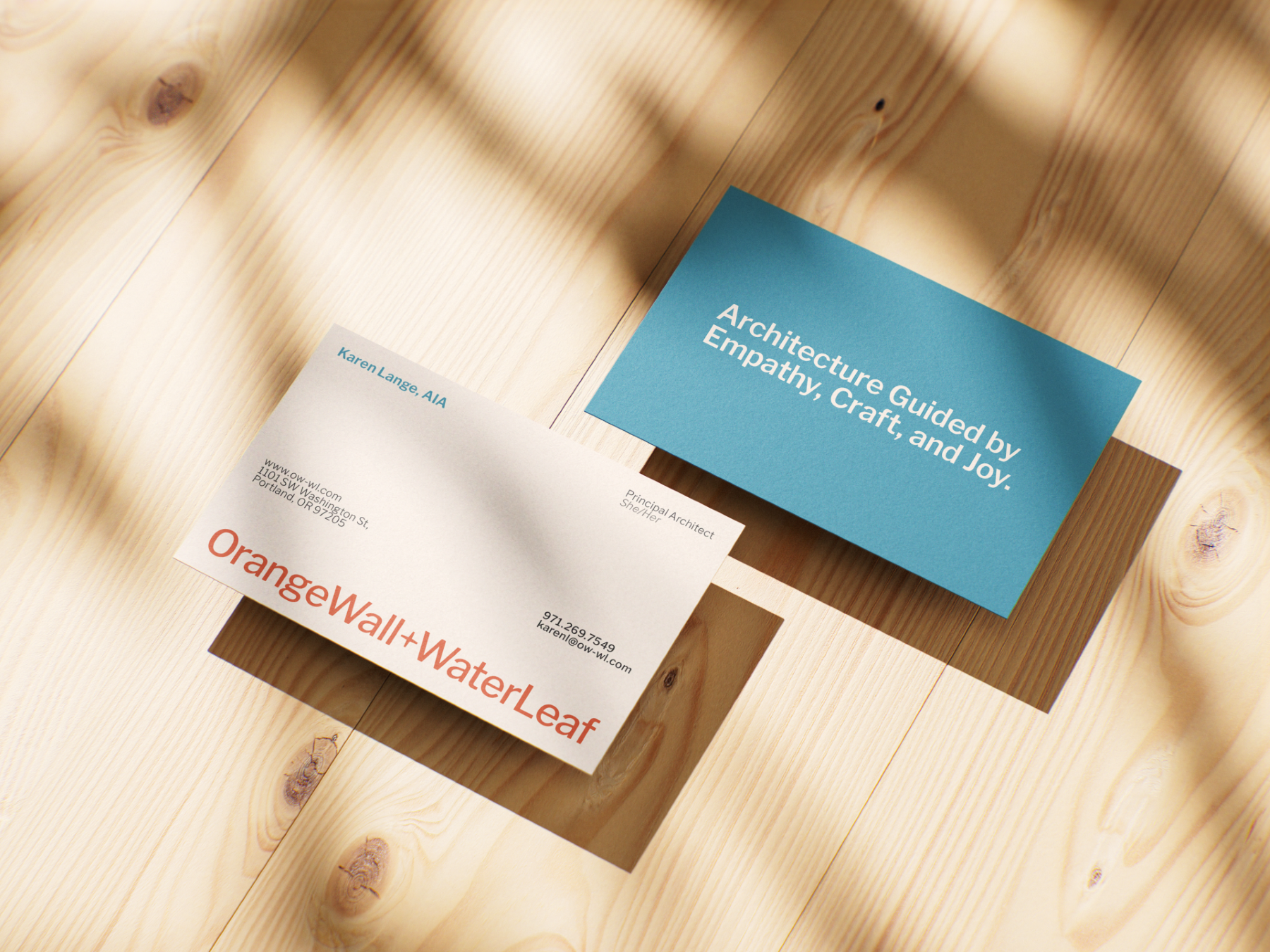
For OrangeWall+WaterLeaf an Architecture Studio, the solution was direct: keep both names, connected by a plus sign that acknowledged what the merger actually was. Not an acquisition, not a rebrand of one firm into the other's identity, but an addition, two practices combining to create something more capable than either separately.
The plus sign became the central design element of the identity. Architecturally precise, visually distinctive, immediately symbolic of what the firm had done and what it stood for going forward. It was not a compromise between two existing marks, it was something new that neither firm had owned before.
The lesson: the right naming solution for a merger is usually the one that is most honest about what the merger actually is. Euphemism and abstraction rarely produce names that last.

The Visual Direction: Editorial and Forward-Looking
Once the naming and positioning were settled, the visual direction followed from them.
The merged firm needed an identity that looked forward, not backward. The two predecessor firms had distinct visual languages that had served them well for years. Carrying either of them forward would have sent the wrong signal, that one firm had absorbed the other, rather than that something genuinely new had been created.
The editorial direction we chose was deliberate. A strong, confident wordmark. Clean, precise typography. The "+" symbol as an architectural element that could carry significant visual weight and serve as a standalone mark in applications where the full name was too long. Color — orange and blue, drawn from both legacy firms — used boldly rather than softly, signaling the energy and ambition of the next generation of leadership rather than the restraint of established practice.
The result was a brand that felt simultaneously rooted in both firms' histories and clearly oriented toward what came next. Existing clients could see the connection to the firm they had worked with for years. New clients and candidates could see a practice with a clear identity and a confident sense of direction.
The Leadership Transition Layer
One thing that makes architecture firm merger rebrands uniquely complex is the generational dynamic that almost always accompanies them. Mergers between established firms rarely happen when both leadership teams are at the same career stage. More often, they happen when founding principals are thinking about transition and emerging leaders are ready to step into larger roles.
That dynamic shapes the brand process in ways that go beyond the design work. The brand needs to honor what the founding generation built, without becoming a monument to it. It needs to make space for the emerging generation's vision, without feeling like it has abandoned the clients and relationships the founding generation cultivated.
Getting that balance right requires naming it explicitly in the process. In the OrangeWall+WaterLeaf engagement, we talked openly about the transition dynamic in the workshop sessions, not as a background condition to work around, but as a central strategic reality that the brand needed to address. The positioning we developed reflected both the legacy and the forward momentum. The visual identity was calibrated to feel established and confident without feeling static.
The brand was built to carry the firm through the transition, not just to mark the moment of the merger.
What Other AEC Firms Can Take From This
The OrangeWall+WaterLeaf engagement was a specific situation, two Portland firms, a years-long merger process, eight stakeholders, a generational transition. But the lessons from it apply to any AEC firm facing a significant brand change at a moment of organizational complexity.
Front-load the alignment work. The investment in getting stakeholders to a shared understanding before design begins pays back every time. It shortens the design feedback cycle, produces better decisions, and creates a leadership team that is invested in the outcome rather than resigned to it.
Be honest in the naming. The right name for a firm in transition is usually the one that accurately describes what the firm actually is, not the most creative option or the most conservative one.
Design for the next chapter, not the current moment. The brand built for a merger needs to carry the firm through years of growth and change. Calibrate the visual direction toward where the firm is headed, not just where it is today.
Treat the leadership transition as a brand question, not just an organizational one. How the brand handles the transition from founding to next-generation leadership affects how clients, candidates, and partners experience that transition. Get it right in the strategy, and the design will follow.

Where OrangeWall+WaterLeaf Is Now
Phase 1 of the Fairbuilt branding engagement, naming, brand strategy, and brand identity, is complete. The brand is in active use across marketing materials and firm communications. The leadership team is unified behind the identity and what it represents.
Phase 2, website design and development, is in progress. When it launches, OrangeWall+WaterLeaf an Architecture Studio will have a complete digital presence built for the merged firm's capabilities, the full team, and the next generation of clients and projects the firm is positioned to pursue.
See the full project: OrangeWall+WaterLeaf an Architecture Studio