Rebranding Your Firm

Your Firm Has Evolved. It Might Be Time for Your Brand to Catch Up.

A rebrand is not just a new logo. It's a deliberate decision to present your firm as it actually is today, not as it was when the practice first started. For AEC firms navigating change, getting that right matters more than most leaders expect.

When a Rebrand Makes Sense

Most Rebrands Are Not About Boredom. They're About Change.

The firms that come to Fairbuilt for a rebrand are not doing it because they woke up and decided they needed a new logo. They're doing it because something real has changed and their current brand is no longer telling the right story.

The most common triggers we hear:

A leadership transition or principal succession is underway. The firm is changing hands, a founding partner is stepping back, or a new generation of leadership is stepping forward. The brand needs to signal continuity while making space for what comes next.

The firm has grown significantly in size or capability, new project types, new markets, new staff, but the identity was built for the version of the firm that existed five or ten years ago. Every time someone looks you up online, the brand and website undersell where you actually are.

The talent situation has become a problem. Strong candidates are evaluating your firm before they apply, and what they find does not reflect the culture, the work, or the direction of the practice. The brand is costing you people before you ever meet them.

Any one of these is a legitimate reason to rebrand. Together, they make it urgent.

What a Rebrand Actually Involves

A Rebrand is a Strategic Decision Before it's a Design Decision

This is where a lot of firms get into trouble. They start with a designer, get a new logo, and then realize halfway through that they never actually got clear on what the new brand was supposed to say, who it was for, or how it was different from what they had before. The result looks different but does not feel meaningfully better.

A rebrand done well starts with strategy. Before any visual work begins, we need to be clear on a few things: what has changed about your firm, what you want to be known for going forward, who your best clients are and what they need to see from you, and how your positioning in the market needs to shift. Those answers shape everything that follows, the name refinement if relevant, the visual identity, the brand voice, the website, and how the rebrand gets communicated to existing clients.

The design is the expression of that strategy. When the strategy is clear, the design decisions get easier and faster and the results hold up longer.

Person using laptop showing OrangeWall + WaterLeaf architecture website with a house and text on screen.
How We Approach a Rebrand

 The Fairbuilt Rebrand Process

Our Capabilities
Our Capabilities
Discover
Discovery and Alignment

We start by understanding what has changed and what the rebrand needs to accomplish. That means conversations with firm leadership, sometimes with key staff and trusted clients, and a clear-eyed look at your current brand, your competitive position, and the story you want to be telling.

Strategy
Strategy Development

We define your new positioning — who the firm is for, what it stands for, and how it communicates that clearly and consistently. This is the document that makes every design decision downstream faster and more defensible.

Identity
Identity Design

We translate the strategy into a new visual and verbal identity. Logo system, color, typography, brand voice, and the brand standards guide that equips your team to apply it consistently from day one.

Website
Website and Touchpoint Rollout

For most firms, the rebrand extends into a new or significantly updated website. We handle that as part of the engagement, along with guidance on how to roll the rebrand out across your other touchpoints — proposals, email signatures, signage, social.

Client
Client Communication

We help you think through how to introduce the rebrand to existing clients in a way that reinforces trust rather than creating uncertainty. A rebrand should feel like a natural evolution, not an abrupt departure.

Woman writing on a whiteboard labeled Process while two colleagues watch in a meeting room.
Who This Is For

A Rebrand With Fairbuilt is the Right Fit if...

  • Your firm is navigating a leadership transition, ownership change, or principal succession
  • Your brand was built for an earlier version of your firm and has not kept pace with your growth
  • You are trying to attract stronger talent and your current brand is not helping
  • You are entering new markets or pursuing new project types and the current positioning is holding you back
  • You have a sense that your brand no longer reflects the quality or character of your work but are not sure exactly what needs to change
  • You have tried to rebrand before and it did not land the way you hoped — and you want to do it properly this time
Reach out
Reach out
Featured work

Architecture Firm Rebrands in Practice

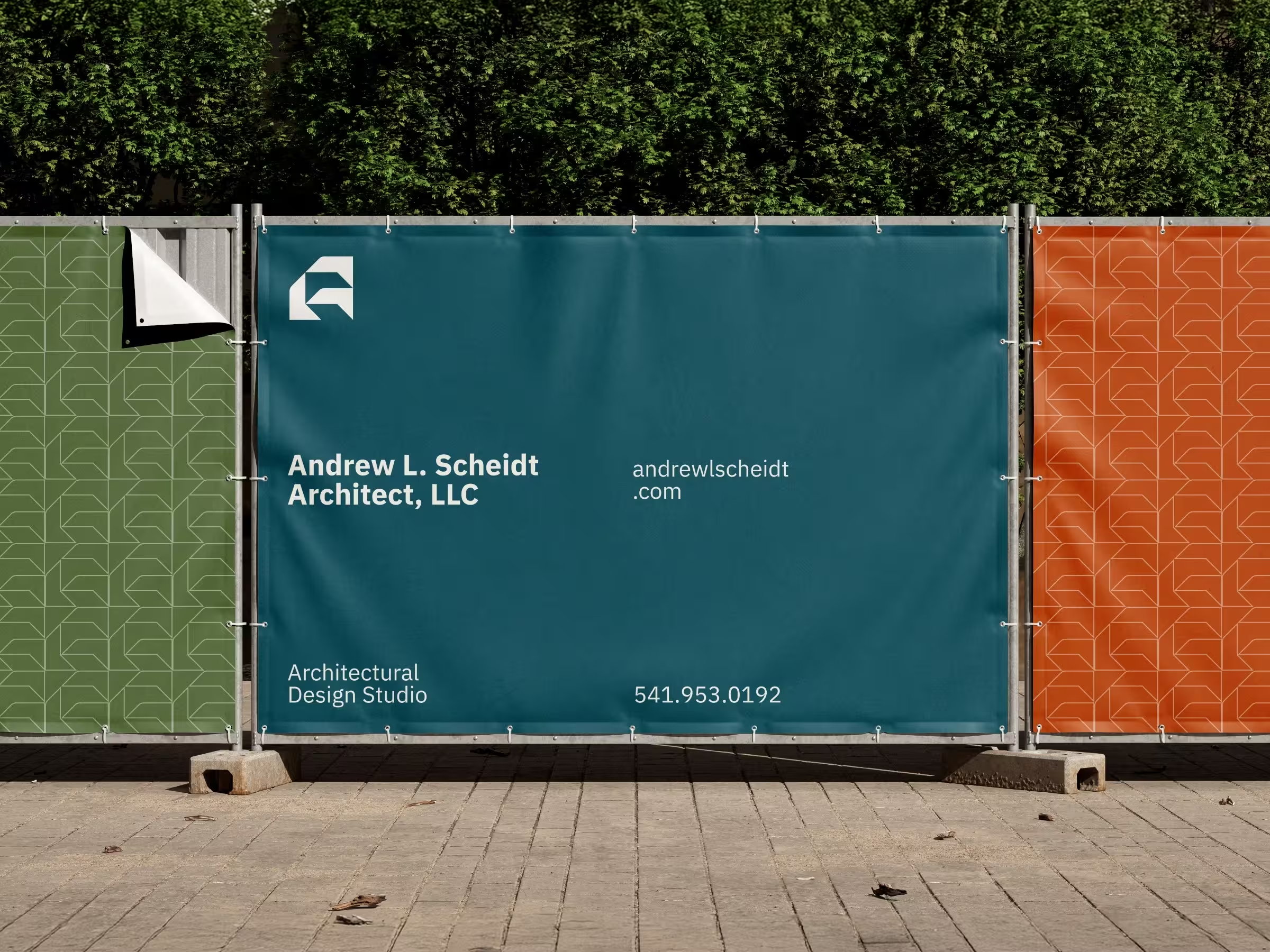
Andrew L. Scheidt, Architect

Andrew L. Scheidt, Architect

An established architecture firm was ready to evolve beyond a generic identity and position itself around a distinctive design philosophy. Through Brand Strategy, Architecture Firm Branding, and a refined visual identity, we helped Andrew L. Scheidt establish a brand that attracts higher-value residential clients and supports the firm's long-term growth.

Services: Brand Strategy, Brand Positioning, Brand Identity

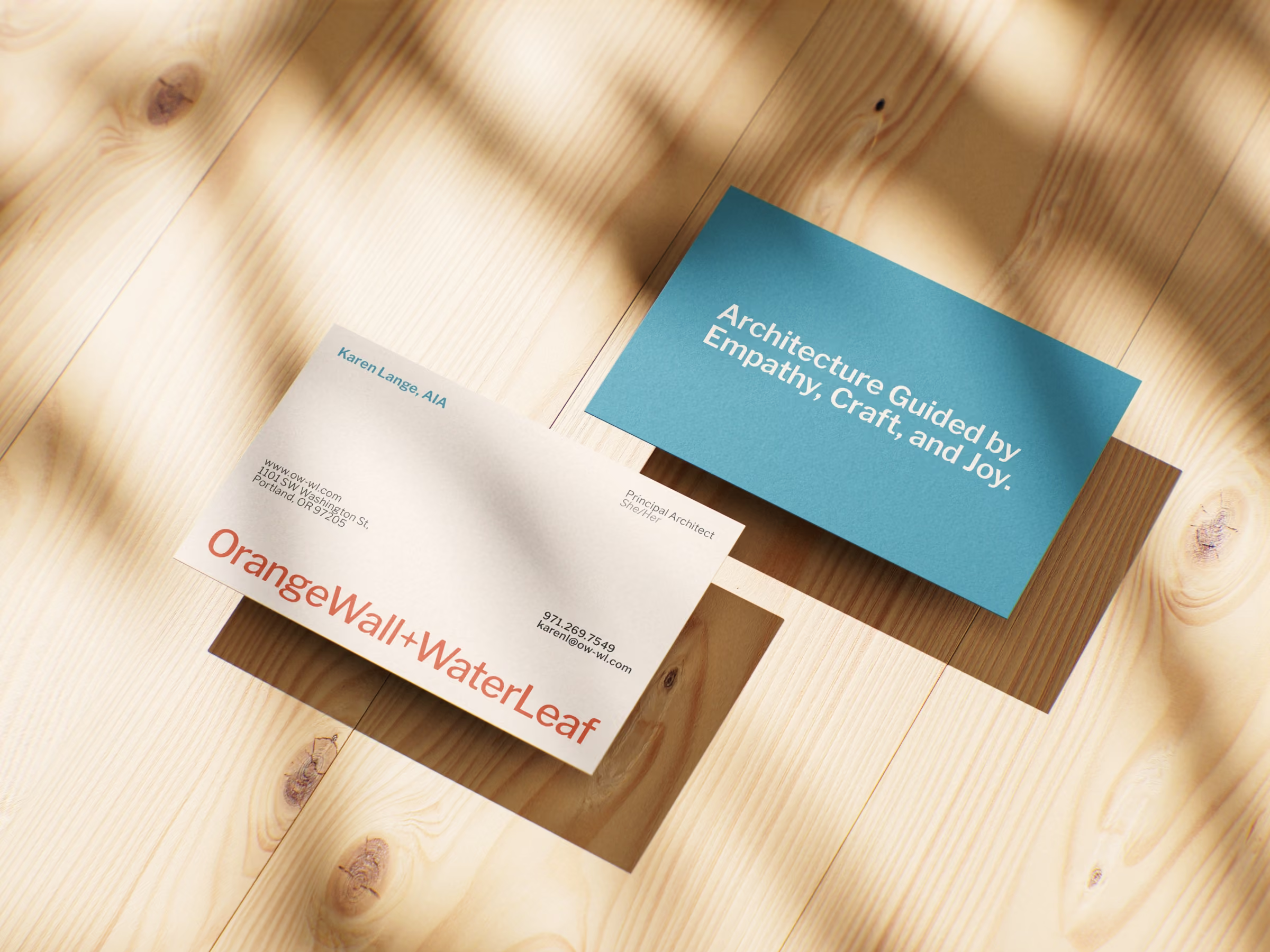
OrangeWall+WaterLeaf

OrangeWall+WaterLeaf

Two established Portland, Oregon architecture firms. Eight stakeholders with eight points of view. One generational transition and a brand that had to honor the history of both firms while making room for where the merged practice was headed.

Services: Naming, Brand Strategy, Brand Identity

A Common Concern

What About Our Existing Clients?

This is the question almost every firm leader asks first, and it is the right one to ask.

The firms that handle rebrands well are the ones that plan the client communication as carefully as they plan the design work. A rebrand does not have to feel like a break with your history or a signal that something was wrong with the firm before. Done well, it feels like the natural next chapter, a firm that has grown and evolved and is presenting itself accordingly.

We think through that communication strategy explicitly during the engagement. The goal is to make existing clients feel confident about the firm's direction, not uncertain about what has changed.

Seven people sitting around a table in a meeting room reviewing documents and taking notes.
FAQ

Common Questions About AEC Firm Rebrands

How is a rebrand different from refreshing our current brand?

A refresh updates the visual presentation without changing the underlying positioning — a cleaner logo, updated colors, a modernized website. A rebrand reconsiders the positioning itself: who the firm is for, what it stands for, and how it communicates that. Most firms that come to us thinking they need a refresh discover in the strategy process that the bigger need is upstream. We will give you an honest read on which one your firm actually needs.

What if we only want to update the logo and not the whole brand?

We can scope a focused identity refresh without a full strategy engagement. That works best when your firm's positioning is already clear and the issue is primarily visual — the mark is dated, the system is inconsistent, or the identity never quite reflected the firm's quality. If the positioning is also unclear, we will tell you that and recommend the right scope.

How long does a full rebrand take?

A strategy-led rebrand covering positioning, identity, and a new website typically runs two to four months from kickoff to launch. The timeline is driven by the complexity of the firm, how quickly leadership can engage in the working sessions, and the scope of what needs to change. We set clear expectations before anything begins.

We are in the middle of a leadership transition. Is now the right time to start?

Often yes. A rebrand initiated during a leadership transition can be a powerful signal to clients, staff, and the market that the firm is moving forward with confidence. The key is having a clear strategic foundation before the design work begins — so the new brand reflects where the firm is headed, not just who is leaving it.

How do you work with firms that have partners who do not fully agree on the direction?

Carefully, and with structured facilitation. Alignment across firm leadership is one of the most important things we create in the strategy phase — because a rebrand that leadership is not fully behind will not get used consistently. We design the process to surface and resolve those disagreements before they show up as design feedback.

Testimonial

"I have been able to finally bring forth a confident and coherent business brand strategy."

Andrew L. Scheidt, AIA
Architect